
Washington — A full-scale military confrontation between the United States and Iran would not unfold in a vacuum. It would ignite a chain reaction stretching from the Persian Gulf to Wall Street, from oil fields in the Middle East to gas pumps in suburban America.
And if such a conflict were launched under a renewed Trump presidency, the political, economic, and strategic consequences would be immediate and explosive.
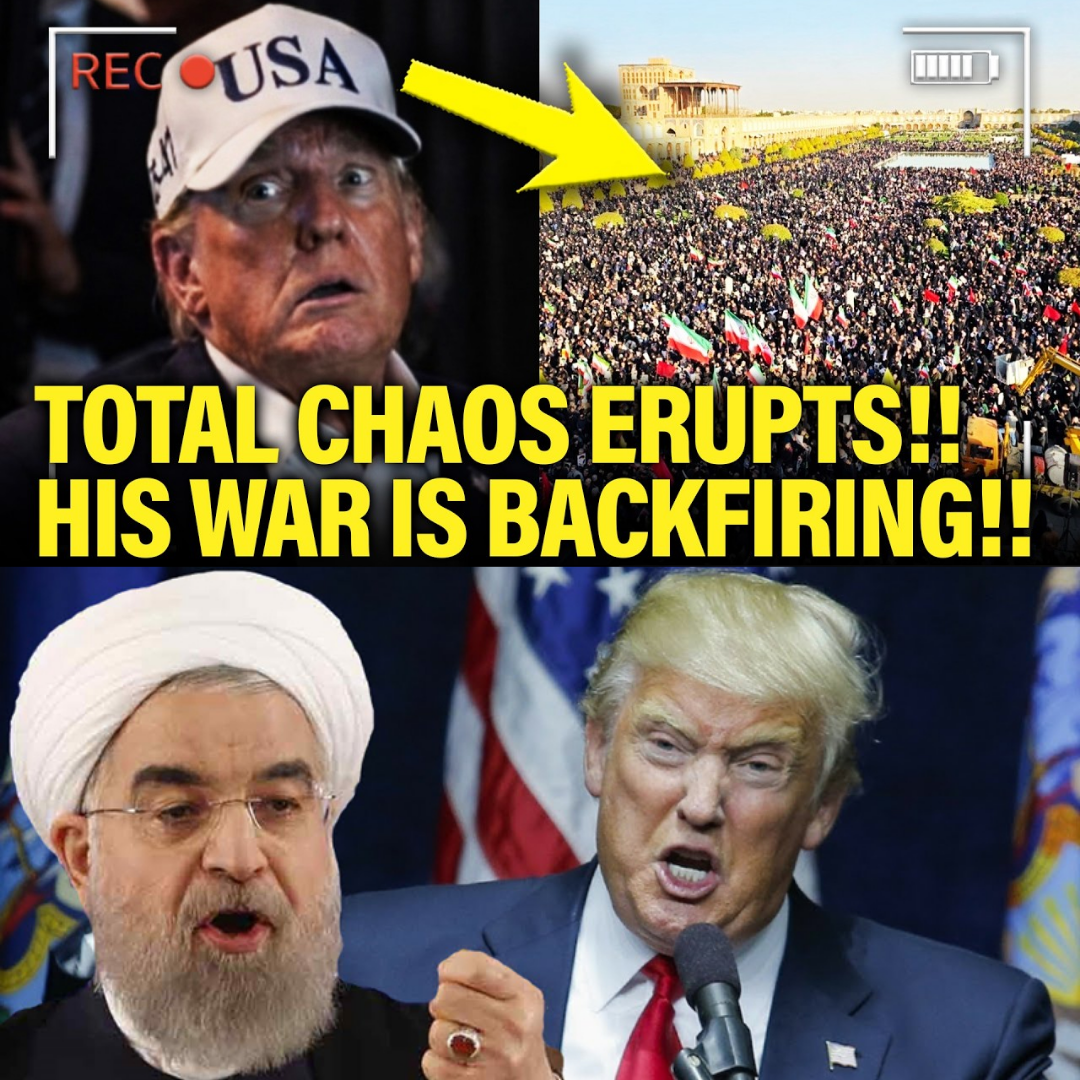
This is what that eruption would look like.
The Opening Salvo
The first hours of a U.S.–Iran war would likely begin with precision airstrikes: cruise missiles launched from naval destroyers in the Gulf, stealth bombers targeting Iranian command infrastructure, cyber operations designed to blind radar and disable communications. The stated objective would be swift dominance — crippling Iran's ability to retaliate before it could mount a coordinated response.
But Iran is not Iraq in 2003. It is not Afghanistan in 2001. It has spent decades preparing for precisely this scenario.
Within hours of U.S. strikes, ballistic missiles would arc toward American bases in Iraq, Qatar, Bahrain, and the United Arab Emirates. Drones would swarm across borders. Proxy forces embedded across the region would activate. Hezbollah in Lebanon, Shiite militias in Iraq, Houthi forces in Yemen — each front would ignite almost simultaneously.
What begins as a controlled strike campaign would metastasize into a regional firestorm.
The Strait of Hormuz: The World's Energy Chokepoint

The most immediate global shock would not be military — it would be economic.
Roughly one-fifth of the world's oil supply passes through the Strait of Hormuz, the narrow maritime corridor separating Iran from Oman. Even the perception of instability there sends traders scrambling. In an active war, the strait becomes a weapon.
Iran would not need to close it completely. A handful of mines. A missile strike on a tanker. A drone attack near a shipping lane. Insurance rates would skyrocket overnight. Tankers would hesitate. Shipping schedules would collapse.
Oil prices would not climb gradually — they would spike violently.
A jump of $20 or $30 per barrel within days would not be out of the question. Gas prices in the United States could surge past levels that reignite inflationary panic. Europe, already balancing fragile energy security, would brace for another shock. Emerging markets dependent on imported fuel would face immediate strain.
The battlefield would extend directly into household budgets.
Markets in Freefall
Financial markets detest uncertainty. War in one of the world's most strategic regions is the definition of uncertainty.
The Dow Jones could plunge hundreds of points in a single trading session. Global indexes would mirror the fall. Investors would flee to safe havens — gold, U.S. Treasury bonds, the dollar — even as they question how sustainable American stability remains amid prolonged conflict.
Airlines would tumble on fuel cost fears. Shipping stocks would nosedive. Defense contractors might surge initially, but even they would face volatility as escalation risks grow unpredictable.
Wall Street's message would be clear: this is not a contained operation.
Domestic Political Shockwaves
On Capitol Hill, reactions would fracture instantly.
Supporters would frame the strikes as strength — a long-overdue confrontation with a hostile regime. Critics would argue the move was reckless, destabilizing, and economically self-destructive. Hearings would be scheduled. Intelligence briefings demanded. Protest movements would gather momentum in major cities.
The American public's tolerance for prolonged Middle Eastern conflict is limited. Memories of Iraq and Afghanistan remain raw. Casualties — even minimal at first — would shift opinion quickly.
If American service members were killed in retaliatory strikes, pressure would mount on the administration to escalate further. Each escalation would narrow the path back to diplomacy.
Iran's Asymmetric Advantage
Iran does not need conventional superiority to inflict pain. Its doctrine emphasizes asymmetry — leveraging geography, proxy networks, and long-range missile capabilities to offset U.S. technological dominance.
Cyberattacks would likely intensify. American infrastructure — energy grids, financial systems, transportation networks — could face disruption attempts. Even minor breaches would generate outsized panic.
Regional embassies would heighten security. Intelligence agencies would monitor sleeper cells and coordinated influence campaigns. The war would not be confined to a traditional battlefield; it would spill into cyberspace and psychological terrain.
Israel and the Northern Front
Israel would not stand idle. Any U.S.–Iran confrontation would place it directly in Tehran's crosshairs. Missile exchanges between Israel and Iranian-backed forces in Lebanon could escalate into a second major front.
Iron Dome batteries would intercept waves of projectiles. Air raid sirens would echo across Israeli cities. Civilian casualties, even limited, would inflame tensions further.
The conflict's geography would expand rapidly, making de-escalation exponentially harder.
China and Russia: Watching and Calculating
Global powers would not rush into the conflict, but they would not ignore it either.
China, heavily dependent on Middle Eastern oil, would push urgently for stability while quietly securing alternative supply routes. Russia, balancing its own strategic interests, could exploit the distraction to maneuver elsewhere — in Eastern Europe, in energy markets, in diplomatic arenas.
A U.S.–Iran war would not exist in isolation; it would ripple across every major power relationship.
Oil Shock and Inflation Spiral
Back home, the economic consequences would move from abstract to personal within weeks.
Gas stations would post higher prices. Trucking companies would pass costs to retailers. Food prices, already sensitive to transportation expenses, would edge upward. Inflation metrics would climb again just as central banks hoped to declare victory over earlier spikes.
The Federal Reserve would face a dilemma: raise rates to combat inflation and risk recession, or hold steady and risk price instability. Consumer confidence would erode.
The war's political consequences would intensify as economic pressure grows.
Military Endgame — Or Lack Thereof
Even if U.S. airpower decimated Iranian infrastructure, the fundamental question would remain: what constitutes victory?
Regime change is not a clean surgical outcome. It invites chaos, power vacuums, and prolonged occupation scenarios. Limited strikes, meanwhile, risk appearing inconclusive while leaving Iran's retaliatory capacity intact.
The longer the conflict persists, the more it drains resources — financial, military, and political.
A swift, decisive conclusion would be the ideal. History suggests such clarity is rare.
Backlash Among Allies
European allies would voice concern quickly. NATO partners would demand clarity on objectives and timelines. Gulf states, hosting American bases, would worry about becoming permanent targets.
Diplomatic channels would hum with urgency. Emergency sessions at the United Nations would convene. Calls for ceasefire would compete with calls for resolve.
America's global image — already contested in various regions — would undergo another stress test.
The Human Toll
Beyond geopolitics and markets lies the human dimension.
Civilians in Tehran, Isfahan, Shiraz would shelter from airstrikes. Families in Tel Aviv or Haifa would descend into bomb shelters. American service members stationed abroad would brace for unpredictable retaliation.
War narratives often focus on strategy and spectacle. The lived reality is sirens, blackouts, hospital corridors, and uncertain dawns.
Each casualty reshapes the political narrative at home.
The Risk of Miscalculation
Modern warfare moves at digital speed. A misidentified radar signature. A missile that veers off course. A strike that hits unintended infrastructure. Escalation can spiral before leaders regain control.
The region is dense with armed actors and overlapping alliances. One error could draw in additional nations or ignite dormant conflicts.
In high-tension environments, accidents carry strategic weight.
A Presidency Under Pressure
For any president overseeing such a conflict, the political stakes would be enormous. Initial displays of strength often rally support. Sustained economic pain and mounting casualties erode it.
Approval ratings would fluctuate alongside battlefield updates. Congressional cooperation would hinge on perceived competence and clarity of purpose.
Every press conference would be dissected. Every intelligence leak scrutinized.
Leadership under wartime pressure reveals strengths and weaknesses in stark relief.
The Search for an Exit
Eventually, even the fiercest confrontations require off-ramps.
Backchannel negotiations through intermediaries — Oman, Switzerland, regional powers — would likely intensify. Ceasefire frameworks might revolve around maritime security guarantees, sanctions adjustments, or mutual stand-down agreements.
Yet the deeper grievances between Washington and Tehran would not vanish overnight. Trust, once shattered by open conflict, rebuilds slowly.
The Broader Lesson
A war between the United States and Iran would not be a contained strike-and-withdraw episode. It would be a cascading geopolitical event with economic tremors felt worldwide.
Oil markets would convulse. Financial systems would jitter. Political alliances would strain. Domestic divisions would sharpen.
The phrase "all hell breaks loose" captures not just explosions on a distant horizon, but the interconnected shockwaves across modern global systems.
In an era of fragile supply chains, sensitive markets, and digitally networked infrastructure, regional conflict quickly becomes global disruption.
The ultimate question would not be who fires first, but who can stop before the costs outweigh the objectives.
History has shown that once missiles fly, events develop momentum of their own.
And momentum, once unleashed, rarely bends easily to human intention.